Showing posts with label Royal Mistresses. Show all posts

Elizabeth Blount
First Mistress of Henry VIII

Elizabeth was born somewhere between 1498 and 1502 to Sir John Blount and Catherine Pershall of Kinlet, Bridgnorth. Not much is known of her childhood, except her reputation that she received from her beauty. Elizabeth nickname was Bessie

As a young girl, Elizabeth was welcomed to court as a lady-in-waiting to her majesty Queen Catherine. It was probably then that she caught the King's eye. In either 1514 0r 1515, Elizabeth became the King's mistress. Their relationship lasted for 8 years.


Mistress to the King of England


She lasted longer as the King's mistress then any other mistress. She was acknowledged as the Royal Mistress.

At the end of 1518, Elizabeth found herself with the King's child. This was the first time that a mistress of Henry had found herself with child. In June 1519, Elizabeth gave birth to a son named after his father: Henry.

Elizabeth had done what the Queen could not do; give the King a son.

Little Henry was given the surname of FitzRoy to signify that he was a Royal bastard. Later on he was made Duke of Richmond and Somerset and Earl of Nottingham. It was even suggested that the King was planning to make him is heir if the Queen did not give him a son.


After Henry's birth, the affair ended. It proved that the King was capable of fathering healthy sons. Elizabeth Blount prompted a popular saying, "Bless 'ee, Bessie Blount", often heard during and after this period.


The affair with Mary Boleyn began shortly afterwards. Elizabeth withdrew from court taking her infant son with her.


Later Life


In 1522 she was married to Gilbert Tailboys. She isn't recorded as a figure in the Tudor court after she left. With her husband she had three children: Elizabeth (1520 - 1563), George (1522 - 1539) and Robert (1523 - 1541).

In 1530, she was left a widow when her husband died leaving her very comfortable. Her son, Henry, died in July 1536 of tuberculosis.
After the death of her husband, Elizabeth Blount was wooed in 1532 by Lord Leonard Gray. However she  married Edward Fiennes, a younger man whose Lincolnshire lands adjoined hers.
Elizabeth's
funeral brass 
They were married between 1533 and 1535. This union produced three daughters: Bridget (1536 - ?), Katherine (1538 – 1621) and Margaret (1539 - 1603).
For a short time, she was a lady-in-waiting to Queen Anne (of Cleves), but left because she contracted some health problems at the time of the marriage's annulment. Blount returned to her husband's estates, where she died from consumption.

In conclusion, Bessie was the first woman to give the King a son and  possibly an heir to his throne. This woman helped prove that the King was capable of fathering healthy and living children. If things have had been different and her Henry hadn't died she could of possibly been the King's mother. But, the Royal family would be very different and English history would be altered.


Sources:


Mary Boleyn
“The Other Boleyn Girl”

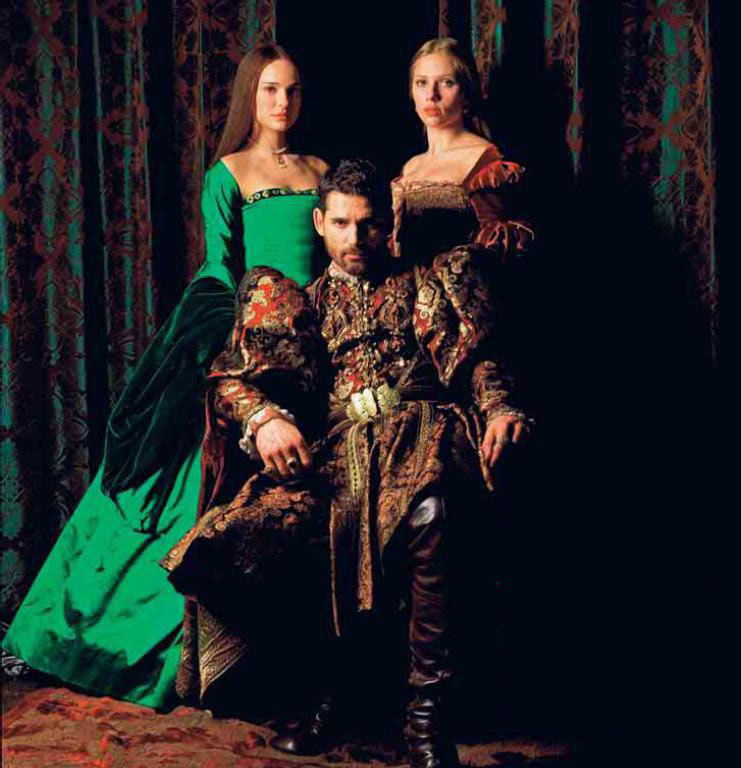
I guess that a lot of you have the 2008 adaptation of Phillipa Gregory’s The Other Boleyn Girl starring Scarlett Johansson, Natalie Portman and Eric Bana: a tale of two divided by their love for a king, which shool Europe and changed the course of England forever.


We all know about Anne Boleyn. A woman whose marriage changed England forever. But what about her sister, Mary Boleyn.

Mary was born in Norfolk. A part of the country where its green, peaceful and by the coast. Well, its the county that I am living in. She was born at Blickling Hall in either 1499 or 1500 as the eldest child to Thomas Boleyn and Elizabeth Howard.

Mary grew up with her younger siblings at the family's home (Hever Castle) in Kent. They spent most of their childhood abroad as Thomas was the English ambassador in Europe from 1512. Mary and Anne would of been taught the art of court life along with languages. 

In 1514, Mary went over to France as part of Princess Mary's (King Henry's younger sister) wedding party. 

Mary returned to England in 1519. She had a wanton reputation as it was rumoured she was King Francis' mistress for a period of them. Francis called her "his English mare" and "una grandissima ribalda, infame sopra tutte" ("a great slag, infamous above all"). Despite all of this, her father got her a place as one of Queen Catherine's ladies-in-waiting. 

After her return the family married her to William Carey, a gentleman of the privy chamber of the king, on February 4th 1520. It is known that she became the King's mistress in 1521.
"The great Prostitute"
Wait one moment. What? She was the king's mistress? No. That has to be wrong. He married her sister. You can't sleep with one sister and marry the other. I'm pretty sure it's a sin after his Catherine had consummated her marriage with Arthur he was up to his eyes in sin. But he is the King after all. Better let him do what he wants or he might chop off our heads. That's what he did to Anne. But I'm getting ahead of myself.

In France, the maitresse en titre was a recognised public figure, wielding influence and patronage, but the affair was never made public and Mary didn't enjoy her wealth like so many women before her did. She was just a fling. A toy for the King to play with. To release his sexual desires with. And she knew it. She was just a pawn.

Her first child fathered by the King was a girl christened Catherine was born in 1524 and was followed by a son named Henry in 1526. At this time the King grew tired of Mary and moved his eyes to Mary's younger sister, Anne who had returned home from the house of Queen Claude of France. 

Anne had returned to England at the end of 1521, for her marriage to one of her Irish cousins, but it had fallen through and her own unauthorised romance with Henry Percy had been blighted by Cardinal Wolsey, so that by the time the King's eye started to wander she was still unspoken for.


Anne was as ambitious as her father, and more strong-willed and intelligent than her sister, but not so good-looking, Anne had no intention of becoming another royal mistress. 


Carey died from a outbreak of sweating sickness in the summer of 1528. After her husband's death Mary remained at court throughout Anne's determined, skilful, six-year-long campaign for power. Mary played the supportive sisterly role, and perhaps drawing on her own experience to give advice on how best to please the king, without allowing him to proceed to the 'ultimate conjunction'.
There was occasional references to Mary in Henry's private letters to Anne, and in November 1530 Anne was within sight of her goal. 

Henry wanted a divorce from Catherine, but it was against the Catholic church. In 1527, while attempting to obtain a papal annulment for his marriage, Henry also requested a dispensation to marry Anne, as he had sleet her sister. What a betrayal. He really wasn't a nice man towards women. To quote Brittany Spears he was "nothing but a womaniser". Sorry, I know cheesy.

In 1531, the family achieved it's goal. Absolute power. The king finally separated from Catherine, and in October 1532, he won the battle for his divorce and Henry broke England away from the power of Rome. He and Anne paid a state visit to France. Mary was among the 30 ladies who accompanied them.

Mary watched her pregnant sister marry, be crowned Queen and give birth. Poor Mary. You have to feel sorry for her. Her father was created Earl of Wiltshire, brother George was Viscount Rochford - but there was nothing for Mary and, surprisingly, no attempt was made to find her another husband.

She took matter into her own hands in 1434 when she married William Stafford who was a man of low birth. She married for love in secret. Once her family discovered her marriage she was cut off completely and banished from court.  She admitted that she might have chosen 'a greater man of birth and a higher', but never one that would love her so most, or a more honest man. And she went on, 'I had rather beg my bread with him than to be the greatest queen in Christendom. And I believe verily ... he would not forsake me to be a king.' 

OMG! How could her family do that to her? She forsake her soul to become the King's mistress, committed adultery, and gave the Boleyn power in England.    

She was banished to Rochford in Essex where she lived with William. This was good as when the accusations were made against Anne and George, she was able to escape their fate: beheading. During this time, there is no record of her visiting any member of her family. 


After Anne’s execution, their mother retired from the royal court, dying in seclusion in 1538. Her father, died in 1539. Following the deaths of her parents, Mary became the sole heir to the Boleyn inheritance. She lived out the rest of her days in obscurity and relative comfort with her second husband. 


Mary had two children with William: Anne Stafford (date of birth and death are unknown) and Edward Stafford (1535–1545). 


Her children were to prosper in the reign of their cousin, Elizabeth I, who showed special favour towards her mother's kin. Catherine Carey married Sir Francis Knollys, a distinguished pillar of the Elizabethan establishment, and became one of the queen's closest friends. Henry Carey was raised to the peerage as Baron Hunsdon and followed a military career, playing a leading part in suppressing the Northern Rising of 1569, and was rewarded with a personal note of thanks from his sovereign lady, signed 'Your loving kinswoman, Elizabeth R'. 


The Boleyn/Carey/Tudor connection continued on to the end of the century. Catherine's daughter Lettice married Robert Dudley and after their marriage was thrown into the tower. It was Mary's grandson, Robert Carey, who was with the queen at Richmond Palace in March 1603 when she died and recorded a moving account of her last illness and death. It was Robert, too, who rode from Richmond to Edinburgh, accomplishing the journey in a record three days, to tell James of Scotland that he was king of England at last.


Mary died on the 19th July 1543.

In conclusion, Mary had a life full of drama: mistresses to two king's, a main player in rise of Anne Boleyn as Queen, saw the change in England, married for love, banished from court, witnessed the death of her younger siblings and then the death of her parents. Her life should really be one of those reality shows that are on the telly. Watch out The Only Way is Essex and Made in Chelsea. 

To history she is known as The Other Boleyn Girl, but I don't believe that. I think she has her own story. She is not merely The Other Boleyn Girl.

I do recommend that if you haven't to read Phillipa Gregory's The Other Boleyn Girl. I couldn't put it down.

Her is the trailer to The Other Boleyn Girl. Enjoy!


                                                         OR


Sources:


Alice Perrers

Whore? Or just a woman ahead of her time?

There was ... in England a shameless woman and wanton harlot called Ales Peres, of base kindred ... being neither beautiful or fair, she knew how to cover these defects with her flattering tongue.

Just recently I finished The King's Concubine by Anne O'brien, a story about Alice Perrers who was the mistress to King Edward III, and  I found her story fascinating. She defiantly deserves a place on this blog. Her story is amazing, she is one of the many women in history who are born centuries too early. She is given a bad reputation, but I think that should change that; she started as a nobody and rose up to be one of the most powerful women in 14th Century England. So I would like to dedicate this post as a tribute to her.

Alice was born in 1348 when England was at the mercy of The Black Death that was sweeping across Europe. She wasn't of high breeding or had wealth or family connections. Her parents were probably a town labourer and a taven whore, we don't know for sure as she was left at the doorstep St Mary's in Barking in Suffolk. There she grew up, surrounded by nuns and was destined to become one herself.

When she was around 14, she was taken to the household of Janyn Perrers,where she became his wife, but only in name as the marriage was never consummated as he only wanted a wife to take care of him in his old age and not to give him pleasure. Alice was treated liked a servant: brought in the plates for dinner, cleaned the house etc. When Jany died Alice was left with nothing. Not a penny to her name. Destitute. No family or friends. The only place she could return to was St Mary's.
Queen Phillipa

In 1363, Queen Phillipa came to St Mary's and met Alice. Phillipa decided to created her as one of ladies-in-waiting. Why? Alice wasn't of high birth like the Queen's ladies were supposed to be. Alice was not beautiful but plain and "famously ugly". So why did the Queen want her at court?

Phillipa was ill. She could no longer satisfy her husband anymore. She needed someone to give him the pleasure she could no longer give. Somebody she could trust. That somebody was Alice.

At the age of only 15, Alice was led to the King's chambers where the she would become the King's mistress. King Edward was 50 years at the time, 36 years Alice's senior, he was old enough to be her grandfather and she his granddaughter, but he took her anyway. It was rumoured that she used witchcraft to become part of the Queen's household and lure the king into a sexual liaison that he would never escape from.


Before Edward had never had a mistress because he loved his wife to much to betray her with another woman. He was happy even though Phillipa couldn't share a bed with him anymore, he still stayed faithful. It was only when Phillipa had asked him to think about taking a mistress did his attention turn to Alice. Was the Phillipa's great plan? Maybe so.


Even though Phillipa had given her consent, Edward and Alice were committing adultery, a great sin, especially when the Queen was very much alive.

Edward gave his young lover everything that she desired: jewels, houses, land, he could not refuse her. She bore him 3 children: a son named Sir John de Southeray (c. 1364-1383), and two daughters, Jane and Joan.

In 1369, Phillipa died at Windsor Castle. The affair between the king and his young lover was made public.


After his queen's death, Edward locked himself away from the court and Alice. It was by intervention made by some powerful lords, including the King's third surviving son John of Gaunt, 1st Duke of Lancaster (it is from him that King Henry VII had his right to the throne as his great-great grandson through his mother's side) persuading Alice to speak to the King to become out his "sanctuary" and thus, becoming his Concubine (a woman in an ongoing, marriage-like relationship with a man with whom she cannot be married for a specific reason, i.e. social ranks or that he is already married.) The word, concubine, originates from around 1250–1300 from  Middle English, Anglo-Norman, and Latin. Concubīna translates“to lie together”.


Alice was now a "wife" figure to Edward, but wasn't married to him. She was his lover and confidant. By the king's command she was given Phillipa's jewels which was worth £20,000 and was dressed in golden robes and proclaimed as "The Lady of the Sun". She was Queen in all but name.


Perrers owned 56 manors surrounding the capital: the manor of Gains (probably at Upminster) in Essex; in 1367, she held in custody the lands of Robert de Tiloil. Only 15 were gifts, the other 35 she had bought with her own money. She had become the most  powerful woman in England. With the number of properties she owned she qualified for a earldom if she was a man.


As she rose into favour with the King she gained more and more enemies in the court who were jealous of her power over the King. She was nothing! She deserved nothing! Certainly not the King's affection and favour.


The Bishop of Rochester wrote that "it is not fitting that all the keys should hang from the belt of one woman." Thomas Walsingham (a monk at St Albans) said "no one dared go against her."

During her height of power controlled public policy, ran the royal palaces, nursed the King, st on the King's seat in the law court and traded with sophisticated merchants of London, helping herself to the royal funds intended to help the English army fighting the French. Rumours spread that she sneaked in her merchant step-daughter into the royal chamber for a three or foursome.

She married Sir William Windsor in secret without the King's blessing. Windsor was a Westmorland knight and the royal lieutenant in Ireland. It is unknown when she married him, but it seemed to be more of "business arrangement" rather than a "act of love and passion".

After this marriage was revealed in 1376, the King of course was furious that HIS MISTRESS was sharing herself with another man without him knowing. She was tried by government for corruption. It wasn't banishment from court and retiring to the country but instead banishment from the kingdom. Basically her punishment was exile. Later she was able to return to England and work to regain her lands that were taken from her by the lords in government who claimed they were only property of the crown, which we know they weren't all. It was not until tragedy struck that she came back to court.

In 1377, Edward became gravely ill and would not recover. He was on his deathbed. He kept calling out for Alice, so she was sent to return to court.

She sat by Edward's side as he laid dying. Where was his family? His children? His friends? Alice was the only person there including a priest so Edward could confess his sins and perform the final rites along with a servant.

Edward died at the age of 65 leaving his ten year old grandson Richard as the new King of England. The new king's mother, Joan of Kent, barred Alice from attending her lover's funeral. How cruel can you be?

Alice lived in Essex with William during the next two decades trying to get back her lost property. She never got back what was hers or the wealth of her glory days. They had no children that is recorded. The main problem might have been that he spent most of his time in Ireland as part of his duty to his King and country, while she took care of his estate. In 1384, William died. He left everything to his sisters instead of Alice, which proves that she didn't give him a child of his own or he would of left her more.

Alice lived to the age of 52 and died in 1400. She left her daughters land as her son was settled and in favour of Richard II, his nephew. 

I think that Alice doesn't deserve the bad reputation that she has gotten over 600 years later. Her story is very tragic. Abandoned by her parents, forced to marry a stranger who left her widowed with not a single shilling to her name, forced to become the King of England's mistress, hated by the court, called a whore, banished. It is a real love story with love, sex, betrayal, drama, romance and danger.


Alice Perrers was a remarkable woman who deserves more credit than she is given by history. Her future was weaved by Phillipa when she brought Alice to court and sent her to the King's chambers.
Was she a whore or just a woman ahead of her time? You can decide that, but I think that she was just a woman who was ahead of her time. Thats the problem with this period of time, the woman are brave, intelligent and "have some balls". They would of been better of living now in the present. Just think of how different the world would be. But than the past would be different. Alice is proof of this. 

She was a woman who raised herself from nothing to another remarkable woman in history. She wrote the book on how to be good mistress which her successors i.e. Anne Boleyn used. She is worthy of the praise that I give her and historians give her a bad reputation which she clearly didn't deserve. I applaud Anne O'Brien on her new book about this fine woman who came from nothing to become a somebody.

Sources:
The King's Concubine by Anne O'brien