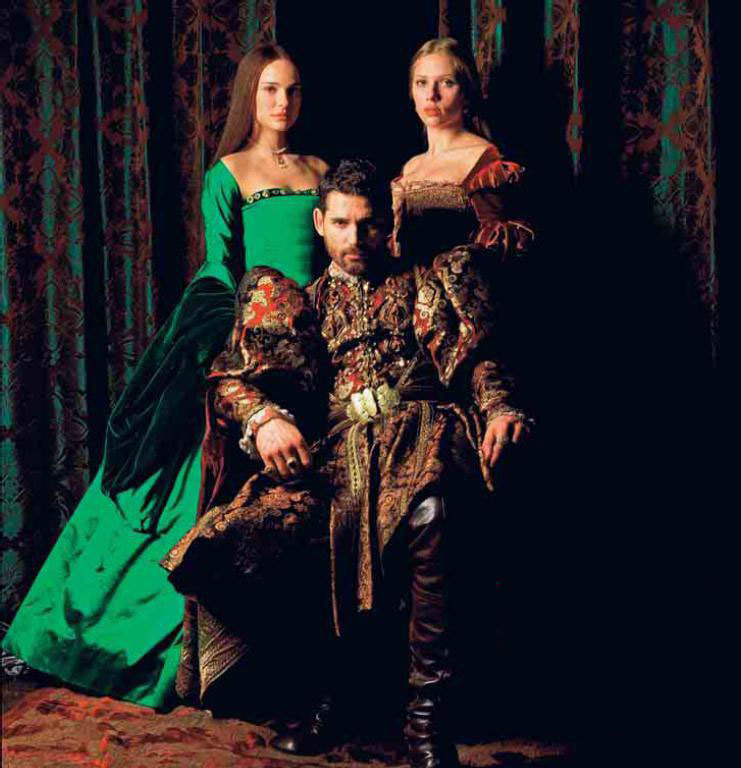
The Howard Girls

I'm going to do something different this time. I'm going to write about two women who both directed to one goal and shared the same fate. Need another clue? They were cousins. Yes that's right I'm going to do a post on Anne Boleyn and Catherine Howard: The Howard Girls.


Anne Boleyn
Born: 1501, Blickling Hall in Norfolk 
Parents: Thomas Boleyn and Elizabeth Howard
Titles: Marques of Pembroke and Queen of England
Spouse: Henry VIII, King of England
Children: Elizabeth Tudor (+ 3 others)
Religion: Anglican/Protestant, formerly a Roman Catholic
Died: 19th May 1536 at the Tower of London


Catherine Howard
Born: c. 1521
Parents: Edmund Howard and Joyce Culpeper
Titles: Queen of England
Spouse: Henry VIII, King of England
Religion: Catholic
Died: 13th February 1543 at the Tower of London


Both of these women were pushed by their family to become Queen of England and also share the same fate by the executioner's axe (or sword).


Anne as we all know played a major part in English History involving the break with Rome, but we know very little about her childhood.


Life  in the French Court


She spent most of earlier days at the court of Archduchess Margaret of Austria from the age of 12. There she would of learnt languages, dancing and singing, all the skills a young women destined for court life would need.

In 1513, her father sent her to attend on Mary Tudor who was going to become Queen of France in 1514. Once Louis XII died Mary left France while young Anne stayed as lady-in-waiting for Queen Claude for 7 years completing her studies in French while taking interests in fashion, philosophy, French culture & etiquette, music and poetry.

When she finally returned back to England in 1521 she was placed into the household of Queen Catherine. Her sister, Mary, was the King's mistress.

Her return was for the marriage to her Irish cousin, James Butler, who was the 9th Earl of Ormond and 2nd Earl of Ossory. The union came to a halt and the two never married. Instead he wed a Cork girl called Joan Fitzgerald in 1532.


Genevieve Bujold
Anne’s Appearance 

I know that Natalie Portman (The Other Boleyn Girl, 2008), Natalie Dormer (The Tudors, 2007-2010) and Geneviève Bujold (Anne of the Thousand Days, 1969) are absolutely beautiful in their portray as Anne, but was Anne really that beautiful?
Natalie Portman

Natalie Dormer
Anne apparently had six fingers and a mole on her neck. This were clear signs of her being a witch. But why would a King of England be attracted to such a woman with no real beauty?

Her French style in both her clothes and attitude charmed the English courtiers.

Anne was the opposite of her pale, blonde-haired, blue-eyed sister, instead she had dark, olive-coloured skin, thick dark brown hair and dark brown eyes. She was average in height with small breasts and a long, elegant neck.


Life  in England 

Anne's debut at court was on March the 1st 1521 at a masque ball.
After her marriage with James fell through she began an romance with Henry Percy who was the heir of the Duke of Northumberland. Percy and Anne entered a secret betrothal.

The relationship ended in 1522. He married Mary Talbot in 1525, but the marriage was unhappy and Talbot sought a divorce in 1532 on the basis that he and Anne had pre-contracted their relationship.

Thomas Wyatt was a young poet who lived nearby the Boleyn's family home in Kent. It is thought that he and Anne were in a relationship. Wyatt was separated from his wife and wanted to marry Anne. There is no evidence to suggest that they did marry, but it seems it was a courtly love.

When finally Henry noticed Anne he intended to make her his mistress like her sister before her but she refused. She said it was "Queen or nothing" implying that if he wanted her he must make her his Queen resulting in divorcing his Spanish, Catholic wife.

In 1527, Henry started to seek an annulment. 

Henry is said to have sent a threatening letter to Pope Clement VII, which is only recently was publicly revealed at the Vatican archives. The letter is 60 ft long and 3 ft wide was signed by around 81 nobles.

Henry passion for Anne must of been powerful as he wrote 17 love letters to her. Henry hated writing letters.


Anne’s Rise 

Henry doted upon Anne: buying her new clothes, giving her expensive jewels, nice apartments and even gave her precedence in the Christmas celebrations over the Duchess of Suffolk who was the King's younger sister, Mary.

In September 1532, she was created Marquess of Pembroke in her own right. She also was given the privilege of attending meeting between Henry and Francis I in Calais. 

Henry was denied a divorce so instead broke from Rome and started his own church. He secretly married Anne on the 25th of January 1533. She was heavily pregnant at the time. It seemed that the Boleyns and Howards had complete power.

Queen of England

Henry wanted Anne's coronation to be spectacular. She was brought by water from Greenwich to the Tower of London dressed in cloth of gold where she would stay in the Royal apartments to awaited her coronation. The barges following her were said to stretch for four miles down the Thames.

On the 1st of June, she left the Tower for Westminster Abbey, where she was crowned with St Edward's crown (before only worn by reigning monarchs) and anointed Queen in a ceremony led by Thomas Cranmer, the Archbishop of Canterbury. She was the last Queen Consort of England to be crowned separately from her husband.


Pope Clement at last took the step of announcing a provisional sentence of excommunication. He condemned the marriage to Anne and separation from Catherine of Aragon.

The eager waiting of a "prince" was over for Henry when on the 7th of September 1533 Anne bore a child at Greenwich Palace. But it was not a son. But a daughter. She was name in honour of Henry's mother Elizabeth of York whose marriage to Henry Tudor brought peace to England after 30 years of bloodshed.


Henry was disappointed at learning the sex of the child, but said "if we can have a healthy daughter, we can have a healthy son." Henry loved Elizabeth, but he needed a son to succeed him. Never before had a girl ruled England on her own accordance.

Elizabeth lived at Hatfield House in Hertfordshire. She was attended by many women including her half sister Mary. Anne visited her daughter as often as she could.


Anne’s Fall


On 8 January 1536, news of Catherine of Aragon's death reached the King and Anne, who were overjoyed. The following day, Henry and Anne wore yellow, the symbol of joy and celebration in England, from head to toe, and celebrated Catherine's death with festivities. With Princess Mary's mother dead, Anne, for her part, attempted to make peace with her.

The Queen, pregnant again, was aware of the dangers if she failed to give birth to a son. With Catherine dead, Henry would be free to marry without any taint of illegality. Mary rebuffed Anne's overtures, perhaps because of rumours circulating that Anne poisoned her mother. 

Later that month, the King was unhorsed knocked unconscious for two hours, a worrying incident that Anne believed led to her miscarriage five days later. On the day that Catherine of Aragon was buried at Peterborough Abbey, Anne miscarried a baby which, according to the imperial Spanish ambassador Chapuys, she had carried for about three and a half months, and which "seemed to be a male child". For Chapuys, this was the beginning of the end of the Anne Boleyn.

Time was running out. Henry's eye was wandering to Lady Jane Seymour. Anne needed to secure her right as Queen by producing a male heir. She soon became pregnant once more but gave birth to a stillborn who was premature in early 1536. The child was a son.

As Anne recovered, Henry declared that he had been seduced into the marriage by means of sorcery. Anne was arrested on charges of adultery on May the 2nd. Mark Smeaton, Henry Norris George Boleyn, Francis Weston and William Brereton were charged with adultery with the Queen. Sir Thomas Wyatt was also arrested, but later released. 

On Monday 15th, Anne and George were put on trial at the Great Hall of the Tower of London on charges of incest. They were found guilty by a jury of noblemen. Among them was their uncle Thomas Howard and Henry Percy.

George's wife, Lady Jane Parker, testified against him claiming she saw them together. Anne defended herself. 


“The love I share with my brother is the natural love that anyone would have for someone they have grown up with, nursed when sick, played with as a child. Judge me my lords, but never forget your verdicts will be judged by God in the greatest court of all.”


But they were found guilty. They would either burn or have their head cut off.

George was beheaded on Tower Hill along with the other innocent men. It must of been terrible for Anne to see the beheading of those men including her own brother.

Anne knew her time was fast approaching. Henry had sent for a French swordsman from Calais to deliver a cleaner blow with a sharp sword than with the traditional axe. It was then that she made the famous comment about her 'little neck'.


Master Kingston was the Constable of the Tower recorded "This morning she sent for me, that I might be with her at such time as she received the good Lord, to the intent I should hear her speak as touching her innocency alway to be clear. And in the writing of this she sent for me, and at my coming she said, 'Mr. Kingston, I hear I shall not die afore noon, and I am very sorry therefore, for I thought to be dead by this time and past my pain.' I told her it should be no pain, it was so little. And then she said, 'I heard say the executioner was very good, and I have a little neck,' and then put her hands about it, laughing heartily. I have seen many men and also women executed, and that they have been in great sorrow, and to my knowledge this lady has much joy in death. Sir, her almoner is continually with her, and had been since two o'clock after midnight."


Death


At 8 in the morning on 19th May 1536, Anne was led to the scaffold dressed in a robe of black damask covered by an ermine mantle of white. She still denied her guilt as an adulteress and disciple of witchcraft and delivered a generous speech praising her former lord and lover Henry VIII. 

Good Christian people, I am come hither to die, for according to the law, and by the law I am judged to die, and therefore I will speak nothing against it. I am come hither to accuse no man, nor to speak anything of that, whereof I am accused and condemned to die, but I pray God save the king and send him long to reign over you, for a gentler nor a more merciful prince was there never: and to me he was ever a good, a gentle and sovereign lord. And if any person will meddle of my cause, I require them to judge the best. And thus I take my leave of the world and of you all, and I heartily desire you all to pray for me. O Lord have mercy on me, to God I commend my soul.


After being blindfolded she knelt at the block, and repeated several times: to Jesus Christ I commend my soul; Lord Jesus receive my soul. She waited only a few seconds before a French swordsman severed her head from her delicate neck.

Anne was buried in an unmarked grave in the Chapel of St. Peter near Tower Green. In the reign of Queen Victoria, Anne's final resting place was marked in the marble floor.

Social ostracism

Shame and trauma hit the Boleyn family. Anne's father continued to work for the King in fear of what Henry may do to remaining members of the Boleyn family. After Thomas' wife died in 1537, a year after Anne's death, he shortly passed away himself. It was said Elizabeth had died from a broken heart from the loss of her children. Mary, died in 1542 but was survived by two daughters and two sons. By 1542 not one member of the immediate Boleyn household had survived. It is believed that remaining relatives, stigmatised by such tragic events, left England's shores for Ireland.

Legends

There are many legends and stories of Anne Boleyn such as her ghost haunts the Tower. One story is that she was secretly buried in Salle Church in Norfolk near the tombs of her Boleyn ancestors. Her body was said to have rested in an Essex church on its journey to Norfolk. Another is that her heart is buried in Erwarton Church, Suffolk.
Sicilian the peasants of Nicolosi believed that Anne Boleyn, for having made Henry VIII a heretic, was condemned to burn for eternity inside Mount Etna. This legend was often told for the benefit of foreign travellers.
A number of people have claimed to have seen Anne's ghost at  Blickling Hall. It is said that on the anniversary of her death at the strike of midnight a ghostlike carriage pulled by black horses arrives at the gates and out comes Anne holding her head.
The most famous account of her reputed sighting has been described by paranormal researcher Hans Holzer. In 1864, Major General J.D. Dundas of the 60th Rifles regiment was quartered in the Tower of London. As he was looking out the window of his quarters, he noticed a guard below in the courtyard, in front of the lodgings where Anne had been imprisoned, behaving strangely. He appeared to challenge something, which to the General "looked like a whitish, female figure sliding towards the soldier". The guard charged through the form with his bayonet, then fainted. Only the General's testimony and corroboration at the court-martial saved the guard from a lengthy prison sentence for having fainted while on duty. In 1960, Canon W. S. Pakenham-Walsh, vicar of Sulgrave, Northamptonshire, reported having conversations with Anne.

Spooky or what!

Anne never gave Henry a son but Jane did, Edward. Edward reigned for seven years, but it was Elizabeth who reigned for 40 years in what was England's golden age.

Anne was the most influential and important queen consort England has ever had.


Catherine was the youngest of Henry's Queens becoming Queen of England at the mere age of 15. Unlike her cousin before her she was guilty of adultery. She loved the jewels, clothes and all of the pretty things she got but never really understood the responsibility of being the Queen. She was after all still a child.


Childhood


She did not know her mother very well as she died when she was very young and her father left her in the care of his step mother, Agnes Tignley the Dowager Duchess of Norfolk. There were many children in the household. She did not have a great education but vicarious, beautiful an buxom.

While living with the Dowager Duchess she had many secrets that would come back to plague her.


1540

Catherine came to court as a lady-in-waiting to Henry's fourth wife: Anne of Cleves. She immediately caught the attentions of the King whose marriage with Anne wasn't consummated. Catherine uncle encouraged to respond to the King.

Queen Catherine

On the 28th June 1540, Henry married the young Catherine. It was rumoured that she was carrying the King's child, but it proved to be false. Henry was 49 at the time. There was a lot of passion especially in the bedroom. Catherine lifted the King's spirit by making him feel young again. "I feel alive Charles. Sex, it's a great medicine." Henry showered his wife with gifts and called her his rose without a thorn.


Affairs

Soon Catherine snapped and made a mistake that the other four Queens never made. In 1541, Catherine began an affair with Thomas Culpeper. Catherine had considered marrying him while she was still a lady-in-waiting. The meetings were arranged by Catherine head ladies-in-waiting, Lady Rochfordwho was her cousin-in=law through her marriage to George Boleyn.
Her past soon caught up with her as childhood friends began to contact her for a position in her household. Francis Dereham was among them.
Back in 1538, Catherine had been pursued by Dereham and they became lovers, addressing each other as "husband" and "wife". The relationship ended in 1539 when the Dowager Duchess discovered them together. Despite this disapproval, Catherine and Dereham had intentions to marry when he returned from Ireland.
This wasn't the first time that Catherine had done something like this. Catherine and Henry Mannox (her music teacher) had a sexual relationship in 1536, when she was 15. Catherine was even quoted as saying, "At the flattering and fair persuasions of Mannox, being but a young girl, I suffered him at sundry times to handle and touch the secret parts of my body which neither became me with honesty to permit nor him to require." The affair ended in 1538.

Downfall

Soon the affairs became knowledge and Catherine was arrested along with her lovers and Jane Parker. After being ordered to keep to her rooms, Catherine briefly escaped her guards to run to the chapel where Henry was hearing Mass where she banged on the doors and screamed his name. Eventually, she was recaptured by her guards and confined to her rooms at Hampton Court.


Imprisonment

She was questioned on 7th November 1541. During this time she was frantic, incoherent state pitiable, Cramner said, "I found her in such lamentation and heaviness as I never saw no creature, so that it would have pitied any man's heart to have looked upon her." The guards were given orders to remove any objects that she might use to commit suicide. She steadfastly denied any precontract, maintaining that Dereham had raped her.

Catherine was imprisoned in Syon Abbey, Middlesex, throughout the winter of 1541. Culpeper and Dereham were executed at Tyburn on 10 December 1541, Culpeper being beheaded and Dereham being hanged, drawn, and quartered. Their heads were placed on top of London Bridge. 

Most of the Howard family were arrested and taken to the Tower where they were tried, found guilty of concealing treason, and sentenced to life imprisonment and forfeiture of goods. In time, however, they were released with their goods restored.

Catherine herself remained in limbo until Parliament passed a bill of attainder on 7 February 1542 claiming what she had done was treason, and punishable by death. She was taken to the Tower on 10th February.

Death

The night before her execution, Catherine spent many hours practising how to lay her head upon the block, which had been brought to her at her request. She died with relative composure, but looked pale and terrified and required assistance to climb the scaffold. She made a speech describing her punishment as "worthy and just" and asked for mercy for her family and prayers for her soul. According to popular folklore, her final words were, "I die a Queen, but I would rather have died the wife of Culpeper." 


Catherine was beheaded with a single stroke, and her body was buried in an unmarked grave in St. Peter near her cousins, Anne and George Boleyn.

Ok. What have we learnt. These two Queens were cousins. They both were charged with adultery with other men, but only Catherine was guilty of this. Anne and Catherine are my favourite Queens of Henry VIII.


Sources:
http://en.wikipedia.org/wiki/Anne_Boleyn


Elizabeth Blount
First Mistress of Henry VIII

Elizabeth was born somewhere between 1498 and 1502 to Sir John Blount and Catherine Pershall of Kinlet, Bridgnorth. Not much is known of her childhood, except her reputation that she received from her beauty. Elizabeth nickname was Bessie

As a young girl, Elizabeth was welcomed to court as a lady-in-waiting to her majesty Queen Catherine. It was probably then that she caught the King's eye. In either 1514 0r 1515, Elizabeth became the King's mistress. Their relationship lasted for 8 years.


Mistress to the King of England


She lasted longer as the King's mistress then any other mistress. She was acknowledged as the Royal Mistress.

At the end of 1518, Elizabeth found herself with the King's child. This was the first time that a mistress of Henry had found herself with child. In June 1519, Elizabeth gave birth to a son named after his father: Henry.

Elizabeth had done what the Queen could not do; give the King a son.

Little Henry was given the surname of FitzRoy to signify that he was a Royal bastard. Later on he was made Duke of Richmond and Somerset and Earl of Nottingham. It was even suggested that the King was planning to make him is heir if the Queen did not give him a son.


After Henry's birth, the affair ended. It proved that the King was capable of fathering healthy sons. Elizabeth Blount prompted a popular saying, "Bless 'ee, Bessie Blount", often heard during and after this period.


The affair with Mary Boleyn began shortly afterwards. Elizabeth withdrew from court taking her infant son with her.


Later Life


In 1522 she was married to Gilbert Tailboys. She isn't recorded as a figure in the Tudor court after she left. With her husband she had three children: Elizabeth (1520 - 1563), George (1522 - 1539) and Robert (1523 - 1541).

In 1530, she was left a widow when her husband died leaving her very comfortable. Her son, Henry, died in July 1536 of tuberculosis.
After the death of her husband, Elizabeth Blount was wooed in 1532 by Lord Leonard Gray. However she  married Edward Fiennes, a younger man whose Lincolnshire lands adjoined hers.
Elizabeth's
funeral brass 
They were married between 1533 and 1535. This union produced three daughters: Bridget (1536 - ?), Katherine (1538 – 1621) and Margaret (1539 - 1603).
For a short time, she was a lady-in-waiting to Queen Anne (of Cleves), but left because she contracted some health problems at the time of the marriage's annulment. Blount returned to her husband's estates, where she died from consumption.

In conclusion, Bessie was the first woman to give the King a son and  possibly an heir to his throne. This woman helped prove that the King was capable of fathering healthy and living children. If things have had been different and her Henry hadn't died she could of possibly been the King's mother. But, the Royal family would be very different and English history would be altered.


Sources:


Joanna of Castile
Joanna la Loca


We all now about Catherine of Aragon who was loved by the English and was discovered by Henry VIII thus creating the Church of England. But what about her older sister Joanna.

Joanna is known to history as Joanna la Loca (Joanna the mad). Her story is a real tragedy and through my research of her I felt pity for her. She was mistreated just like her sister was hundreds of miles away. This is her sad story.

Warning! You may need tissues on standby!

Infanta of Spain

Joanna was born in Toledo, Castille (modern day Spain) on the 6th of November 1479 to Queen Isabella I of Castille and King Ferdinand II of Aragon. Both of her parents were rulers in their own right; Isabella ruled Castille with Ferdinand as her consort and Ferdinand ruled Aragon with Isabella as his consort.  

She was given a proper education due to any royal princess in Christendom at the time, tutored by the best: a dominican priest called Andrés de Miranda, a respectable educator by the name of Beatriz Galindo and her own mother. Her main studies that she did exceptionally well in were religious studies, court etiquette, dance &music and equestrian skills. Joanna spoke six languages: Castilian, Leonese, Galican-Portuguese, Catalan, French and Latin. Amazing. I can only speak English and French and she could six different languages.

Joanna was raised as a Infanta of Spain, but was never expected to inherit either of her parents' kingdoms. Her brother, John, was heir and then any children he. If John died without issue his sister, Isabella, would take his place and then her children. So there were a lot of people before she could ever ascend to the throne.

Marriage

In August 1496, at the age of sixteen, Joanna was sent to Flanders (modern day Belgium, France, Luxembourg and Germany and Holland) to marry Duke Philip of Burgundy. The marriage was to secure an alliance between the two families and strengthen themselves against the French.

When the two finally met on the 20th of October in Lier you could say it was love at first sight as Philip asked a priest to marry them there and then. No formal ceremony. Just a moment of complete passion. The truth wasn't that he fell instantly in love with her, it was that he wanted to take his bride to bed as soon as possible. Romantic? From my point of view yes for wanting to marry after first sight, but no because of motive of just wanting to have her in the marital bed.

The marriage was fruitful as Joanna gave birth to six children: Eleanor (1498 - 1558), Charles (1500 - 1558), Isabella (1501 - 1526), Ferdinand (1503 - 1564), Mary (1504 - 1558) and Catherine (1507 - 1578).

Like most Dukes of the time Philip would be classed now as a "jerk" as he slept with other women. He tried to usurp her birth rights from her. It was said that Joanna slowly became insane therefore being known as Joanna la Loca. She even cut the hair off Philip's mistress.

By the time of Queen Isabella's death in 1504, the couple lived apart.

Princess of Asturias

On the 4th of October 1497 John died. John's wife, margeret (Philip's sister), gave birth to a stillborn daughter on December the 8th. Their sister Isabella died on August the 22nd of 1498. Isabella's only child, Miguel, died on the 19th of July 1500. This made Joanna sole heir to the kingdoms of Castile and Aragon.

She was named as Princess of Asturias in 1502. The lords of the land swore a oath to Joanna as the heir and future Queen. She travelled to Cortes in Castile with Phillip and the Burgundy court. Soon Philip left leaving a pregnant Joanna alone. She gave birth to a son, Ferdinand, in Madrid the following year.

Reign as Queen Joanna of Castile

In November 1504, Queen Isabella leaving her 25 year old daughter Queen of her realm.

Ferdinand lost any rights he had as the King, but was given the right to govern in Joanna's abscene or if she refused to rule and to rule until Charles came of age or if she was not able to rule. Ferdinand wanted to have the throne even if it meant stabbing his own daughter in the back. Her husband much better. He wanted the throne for himself and push his wife away. Boo. Hiss. They are a real pair of pantomime baddies. 


Ferdinand persuaded the cortes that Joanna's "illness is such that the said Queen Doña Joanna our Lady cannot govern".  Ferdinand was appointed as Joanna's guardian. Philip was having no of this. He wanted to be King. He had coins made with "Philip and Joanna, King and Queen of Castile, Leon and Archdukes of Austria". It seemed to be war between these two rulers.

But soon Ferdinand was out of the picture. He married Germaine de Foix, the neice of Louis XII of France. He hoped that she would produce a son and heir for Aragon.

In 1505, Joanna and Philip left Flanders for Castile. Their ships were caught in a storm which were wrecked on the shores of England. What luck. The country which her younger sister was in. They became the guests of the Tudors and stayed at Windsor Castle.


By the time they got to Castile there was civil war in which Ferdinand was trying to take power. His invasion was crushed. Joanna met her father in June 1506 at Villafáfila where Ferdinand handed over the rights of government and retired to Aragon. Ferdinand and Philip met in secret to dethrone Joanna by claiming her to be mad thus unable to rule. 

Ferdinand after his secret meeting with his son-in-law tried to put his actions right by securing her rights as Regent Queen. No agreement was agreed by the two and Ferdinand fled back to his own realm of Aragon.

Philip's Death

The Cortes swore allegiance to Joanna and Philip as Queen and King & Charles as their heir. 

On the 25th September 1506 Philip died of typhoid fever in Burgos, Castile. Joanna was pregant at the time with Catherine. 

By December, she was trying to exercise her power to rule alone, but the country started to fall into ciaos. Her six year old son, Charles, was raised by his aunt in Flanders, while her father stayed in Aragon watching his daughter's realm to fall to pieces. What a nice father.

Plague and famine spread across Castile killing half of the population. It was like an apocalypse. Two of the horsemen of the apocalypse were present: famine and death.

Ferdinand's Rule

When Ferdinand came back to Castile in July 1507, the plague went. This gave the impression that he was the kingdom saviour as he had driven the plague out.

Ferdinand was named regent in 1510. Joanna was sent to a Santa Clara a convent in Tordesillas on the basis that she was mad. Apparently she took Philip's dead body and sleep beside him. A little bit creepy.

Ferdinand ruled until his death in 1516. The crown of Castile, Leon and Aragon were passed to Joanna and Charles with Ferdinand's bastard son Alonso de Aragon acting as regent on behalf of Charles.

Charles' Rule

In 1517, Charles with his sister Eleanor met their mother at Tordesillas where he secured the right to rule as co-King. Even though she agreed, he still kept her in confinement at the convent. The Cortes didn't like Charles very much and called him Su Alteza (your highnes) and reserved majestad (majesty) for Joanna. 

Charles rule of Aragon and Castile plus its territories unified the country creating Spain in 1519. He then became Holy Roman Emperor the same year. He made Spain the most powerful country in the world by building on the achievements and wealth of his grandparents: Isabella and Ferdinand.


Revolt of the Comuneros

In 1520, the Revolt of the Comuneros broke as a response to Charles' rule. The rebels demanded that Castile be governed like in the days of the Reyes Católicos and the Comuneros turned to Joanna. 

Joanna had given written approval to the rebellion, it would have been legalized and would have triumphed. In an attempt to prevent this, a group of royal councilors went to Tordesillas, asking Joanna to sign a document denouncing the Comuneros. Before she could sign the Comuneros stormed the city and requested her support. 

Although she was sympathetic to the Comuneros, she was persuaded by Ochoa de Landa and her confessor Fray John of Avila that if she supported the revolt it would damage the country and her son's kingship. She refused to sign the document granting her support to the Comuneros. At the Battle of Villalar Charles crushed the revolt.

Confinement

Charles was unhappy with his mother after she given her support to the rebels that he had her imprisioned in the convent. Remind you of another Queen. Yes, it reminds me of Eleanor of Aquitaine who was imprisoned.

Joanna health got worst. She did go a bit mad. She was convinced that the nuns wanted to kill her. It became difficult for her to eat, sleep, bathe and clothe herself.

Charles wrote to the convent:  "It seems to me that the best and most suitable thing for you to do is to make sure that no person speaks with Her Majesty, for no good could come from it"


Her youngest daughter Catherine, stayed with her from 1507 - 1516. Eleanor then created a household within the convent to be near her mother.

Joanna died on the 12th April 155 at the age of 75 at the convent. She had survived her mother, father, her husband, six siblings, her brother-in-law Henry VIII and her daughter Isabella. She is entombed in the Royal Chapel of Granada (la Capilla Real) in Spain alongside her parents Isabella I and Ferdinand II, her husband Philip I and her nephew Miguel da Paz, Prince of Asturias. A statue of her stands in Tordesillas and the convent in which she was confined for fifty years can be visited.


Now here comes to a important question. Was Joanna mad? I think at the beginning no. She was just madly in love with her husband. But after everything: betrayed by her husband, father and even her own son she went into a deep depression. Anyone would of gone mad if they were imprisoned in a convent for 35 years.

Sources:
http://en.wikipedia.org/wiki/Joanna_of_Castile


Mary Boleyn
“The Other Boleyn Girl”

I guess that a lot of you have the 2008 adaptation of Phillipa Gregory’s The Other Boleyn Girl starring Scarlett Johansson, Natalie Portman and Eric Bana: a tale of two divided by their love for a king, which shool Europe and changed the course of England forever.


We all know about Anne Boleyn. A woman whose marriage changed England forever. But what about her sister, Mary Boleyn.

Mary was born in Norfolk. A part of the country where its green, peaceful and by the coast. Well, its the county that I am living in. She was born at Blickling Hall in either 1499 or 1500 as the eldest child to Thomas Boleyn and Elizabeth Howard.

Mary grew up with her younger siblings at the family's home (Hever Castle) in Kent. They spent most of their childhood abroad as Thomas was the English ambassador in Europe from 1512. Mary and Anne would of been taught the art of court life along with languages. 

In 1514, Mary went over to France as part of Princess Mary's (King Henry's younger sister) wedding party. 

Mary returned to England in 1519. She had a wanton reputation as it was rumoured she was King Francis' mistress for a period of them. Francis called her "his English mare" and "una grandissima ribalda, infame sopra tutte" ("a great slag, infamous above all"). Despite all of this, her father got her a place as one of Queen Catherine's ladies-in-waiting. 

After her return the family married her to William Carey, a gentleman of the privy chamber of the king, on February 4th 1520. It is known that she became the King's mistress in 1521.
"The great Prostitute"
Wait one moment. What? She was the king's mistress? No. That has to be wrong. He married her sister. You can't sleep with one sister and marry the other. I'm pretty sure it's a sin after his Catherine had consummated her marriage with Arthur he was up to his eyes in sin. But he is the King after all. Better let him do what he wants or he might chop off our heads. That's what he did to Anne. But I'm getting ahead of myself.

In France, the maitresse en titre was a recognised public figure, wielding influence and patronage, but the affair was never made public and Mary didn't enjoy her wealth like so many women before her did. She was just a fling. A toy for the King to play with. To release his sexual desires with. And she knew it. She was just a pawn.

Her first child fathered by the King was a girl christened Catherine was born in 1524 and was followed by a son named Henry in 1526. At this time the King grew tired of Mary and moved his eyes to Mary's younger sister, Anne who had returned home from the house of Queen Claude of France. 

Anne had returned to England at the end of 1521, for her marriage to one of her Irish cousins, but it had fallen through and her own unauthorised romance with Henry Percy had been blighted by Cardinal Wolsey, so that by the time the King's eye started to wander she was still unspoken for.


Anne was as ambitious as her father, and more strong-willed and intelligent than her sister, but not so good-looking, Anne had no intention of becoming another royal mistress. 


Carey died from a outbreak of sweating sickness in the summer of 1528. After her husband's death Mary remained at court throughout Anne's determined, skilful, six-year-long campaign for power. Mary played the supportive sisterly role, and perhaps drawing on her own experience to give advice on how best to please the king, without allowing him to proceed to the 'ultimate conjunction'.
There was occasional references to Mary in Henry's private letters to Anne, and in November 1530 Anne was within sight of her goal. 

Henry wanted a divorce from Catherine, but it was against the Catholic church. In 1527, while attempting to obtain a papal annulment for his marriage, Henry also requested a dispensation to marry Anne, as he had sleet her sister. What a betrayal. He really wasn't a nice man towards women. To quote Brittany Spears he was "nothing but a womaniser". Sorry, I know cheesy.

In 1531, the family achieved it's goal. Absolute power. The king finally separated from Catherine, and in October 1532, he won the battle for his divorce and Henry broke England away from the power of Rome. He and Anne paid a state visit to France. Mary was among the 30 ladies who accompanied them.

Mary watched her pregnant sister marry, be crowned Queen and give birth. Poor Mary. You have to feel sorry for her. Her father was created Earl of Wiltshire, brother George was Viscount Rochford - but there was nothing for Mary and, surprisingly, no attempt was made to find her another husband.

She took matter into her own hands in 1434 when she married William Stafford who was a man of low birth. She married for love in secret. Once her family discovered her marriage she was cut off completely and banished from court.  She admitted that she might have chosen 'a greater man of birth and a higher', but never one that would love her so most, or a more honest man. And she went on, 'I had rather beg my bread with him than to be the greatest queen in Christendom. And I believe verily ... he would not forsake me to be a king.' 

OMG! How could her family do that to her? She forsake her soul to become the King's mistress, committed adultery, and gave the Boleyn power in England.    

She was banished to Rochford in Essex where she lived with William. This was good as when the accusations were made against Anne and George, she was able to escape their fate: beheading. During this time, there is no record of her visiting any member of her family. 


After Anne’s execution, their mother retired from the royal court, dying in seclusion in 1538. Her father, died in 1539. Following the deaths of her parents, Mary became the sole heir to the Boleyn inheritance. She lived out the rest of her days in obscurity and relative comfort with her second husband. 


Mary had two children with William: Anne Stafford (date of birth and death are unknown) and Edward Stafford (1535–1545). 


Her children were to prosper in the reign of their cousin, Elizabeth I, who showed special favour towards her mother's kin. Catherine Carey married Sir Francis Knollys, a distinguished pillar of the Elizabethan establishment, and became one of the queen's closest friends. Henry Carey was raised to the peerage as Baron Hunsdon and followed a military career, playing a leading part in suppressing the Northern Rising of 1569, and was rewarded with a personal note of thanks from his sovereign lady, signed 'Your loving kinswoman, Elizabeth R'. 


The Boleyn/Carey/Tudor connection continued on to the end of the century. Catherine's daughter Lettice married Robert Dudley and after their marriage was thrown into the tower. It was Mary's grandson, Robert Carey, who was with the queen at Richmond Palace in March 1603 when she died and recorded a moving account of her last illness and death. It was Robert, too, who rode from Richmond to Edinburgh, accomplishing the journey in a record three days, to tell James of Scotland that he was king of England at last.


Mary died on the 19th July 1543.

In conclusion, Mary had a life full of drama: mistresses to two king's, a main player in rise of Anne Boleyn as Queen, saw the change in England, married for love, banished from court, witnessed the death of her younger siblings and then the death of her parents. Her life should really be one of those reality shows that are on the telly. Watch out The Only Way is Essex and Made in Chelsea. 

To history she is known as The Other Boleyn Girl, but I don't believe that. I think she has her own story. She is not merely The Other Boleyn Girl.

I do recommend that if you haven't to read Phillipa Gregory's The Other Boleyn Girl. I couldn't put it down.

Her is the trailer to The Other Boleyn Girl. Enjoy!


                                                         OR


Sources:


Catherine de' Medici 
“The truth is, not one of is innocent. We all have sins to confess.” 
-  The Confessions of Catherine de Medici by C.W. Gortner

I have done posts about the Borgias, so I thought that it only be fitting that I do a post on this lady. Catherine was a Florence born girl from the Medici family who were rivals of the Borgias.

Catherine was born in Florence, Italy in April 1519. Her family at the time were rich, wealthy and powerful bankers in Florence. Her died within a month of her birth, so they was raised by her grandmother and then her aunt. During her life two males in her family became Pope of Rome: Pope Leo X and Clement VII. The citizens of Florence named her duchessina (the little duchess). 

In 1527, her family was overthrown by the Florence people due to Pope Clement's rule. Catherine was put into several convents and forced to work for the nuns. In October 1529, Charles V troops laid siege to Florence. As the siege dragged on, the people wanted Catherine to be killed and exposed naked and chained to the city walls. It was even suggested that she be handed over to the troops to be used for their sexual gratification. The city finally surrendered on 12 August 1530. Clement summoned Catherine from her beloved convent to join him in Rome where he greeted her with open arms and tears in his eyes. Then he set about the business of finding her a husband.

On her arrival in Rome, the Venetian envoy described Catherine as "small of stature, and thin, and without delicate features, but having the protruding eyes peculiar to the Medici family". She had suitors, including James V of Scotland who sent an envoy in his place, queuing out the door for her hand. Well she was the niece to the Pope of Roman Catholic Church. 

But, finally, in 1533 Clement arranged for his niece to wed the Duke of Orleans, Henri Valois (Francis I of France's son). This was a great match as she was wealthy but came from "commoner origins". 

The couple were married in October 1533 at Marseille, France. It was a grand affair with dancing and jousting. It was for a nice day for a white wedding. Sorry, I had to use that in this post. The newly-weds left the celebrations at midnight to... you know. Francis is said to have stand witness to make sure the marriage was consummated. He reported that "each had shown valour in the joust". Clement visited them the next morning in bed and gave his blessing.

Catherine saw little of her husband in the first year of marriage. He rarely came to their bed. She was well treated by her the ladies of the court who were impressed with her intelligence and keenness to please.

In 1536, Henry's older brother died of fever, pushing him and Catherine next in line to the throne. They were now the Dauphin and Dauphine of France.

In the first 10 years, Catherine didn't conceive. Henry took a mistress, openly. In 1537, one of his mistresses gave him a daughter who he acknowledged as his. Was this prove that she was barren? France needed them to have a child.

Her ability to conceive did not improve the marriage. Henry took his old governess, Diane de Poitiers, as his mistress in 1538. Diane was 20 years Henry's senior and had more influential over Henry than his wife. It was also her responsibility to raise any royal children. 

According to the court chronicler Brantôme, "many people advised the king and the Dauphin to repudiate her, since it was necessary to continue the line of France". A divorce was a option for the royal family. In desperation, Catherine tried every trick in the book for getting pregnant, such as placing cow dung and ground stags' antlers on her "source of life", and drinking mule's urine. Disgusting, I know but on 19 January 1544, she gave birth to a son, Francis.

After that she had no trouble getting pregnant again. In April 1545, she gave birth to a daughter named Elizabeth. She gave birth to 8 more children during the course of her marriage: Claude, Duchess of Lorraine, Louis of Valois, Charles IX of France, Henry III of France, Margaret, Queen of France, Francis, Duke of Anjou, Louis of Valois, Joan of Valois and Victoria of Valois. 

In 1547 King Francis died. Catherine became Queen Consort of France. She was crowned in the basilica of Saint-Denis on 10th June 1549. As Queen she was given no power but to produce heirs for the dynasty. She acted as regent during his absences from France.

Henry adored his mistress over Catherine and the imperial ambassador reported that in the presence of guests, Henry would sit on Diane's lap and play the guitar, chat about politics, or fondle her breasts.Catherine as a threat to Diane. She even encouraged the king to sleep with Catherine and father more children. 

In September 1551, Henry was born. He was his mother's favourite; she called him chers yeux ("Precious Eyes") and lavished fondness and affection upon him for most of his life. His elder brother, Charles, grew to detest him, resenting Henry's greater health and activity.

In 1556, Catherine nearly died giving birth to twin daughters: Joan and Victoria. Surgeons saved her life by breaking the legs of Joan, who died in the womb.Victoria died seven weeks later. Pyhscians advised that there be no more children in fear for the Queen's life, so the King stopped visiting her bed. 

At the age of five and a half, Mary Stuart, Queen of Scotland, was brought to the French court, where she was betrothed to Francis. Catherine brought her up with her own children at the French court, while Mary of Guise governed Scotland as her daughter's regent.

On 3–4 April 1559, Henry signed the Peace of Cateau-Cambrésis with the Holy Roman Empire and England, ending a long period of Italian wars. The treaty was sealed by the betrothal of Catherine's thirteen-year-old daughter Elisabeth to Philip II of Spain. Their proxy wedding in Paris on 22nd June 1559 was celebrated with festivities, balls, masques, and five days of jousting.

King Henry took part in the jousting, sporting Diane's black-and-white colours. He defeated the dukes of Guise and Nemours, but de Montgomery knocked him half out of the saddle. Henry, like most men, insisted on riding against Montgomery again, and this time, Montgomery's lance shattered into the king's face. Painful. There was blood everywhere, with splinters "of a good bigness" sticking out of his eye and head.

Catherine, Diane, and Prince Francis all fainted. Henry was carried to the Château de Tournelles, where five splinters of wood were removed, but one had pierced his eye and brain. Catherine stayed by his bedside, Diane kept away, "for fear of being expelled by the Queen". 

For the next ten days, Henry's state fluctuated. At times he even felt well enough to dictate letters and listen to music. Slowly he lost his sight, speech, and reason, and on 10th July 1559 he died. From that day, Catherine took a broken lance as her emblem, inscribed with the words "lacrymae hinc, hinc dolor" ("from this come my tears and my pain"), and wore black mourning in memory of Henry.

The Huguenot (protestants) leaders saw the opportunity to take over the French court, but instead were arrested and beheaded. 57 men were killed. That's a lot of heads. The Tudor would be proud. 

The next year, Francis died leaving his 9 year old brother as King Charles IX. Catherine was made regent as her son was too young to rule. During the '60s, there was conflict between the two religions. The Navarre and the Guise conflict grew worse when Gaspard de Coligny ordered the assassination of the Duke of Guise in 1563.

Catherine's youngest daughter, Marguerite, was said to have been in a sexual relationship with Henry Guise. When Catherine found this out, she had her daughter brought from her bed. Catherine and the king then beat her, ripping her nightclothes and pulling out handfuls of her hair.


Catherine pressed Jeanne d'Albret (her late husband's cousin to attend court) writing that she wanted to see Jeanne's children, promising she would not to harm them. Jeanne replied: "Pardon me if, reading that, I want to laugh, because you want to relieve me of a fear that I've never had. I've never thought that, as they say, you eat little children". When Jeanne did come to court, Catherine pressured her hard,playing on Jeanne's hopes for her beloved son for an alliance. Jeanne finally agreed to the marriage between her son and Margaret, so long as Henry could remain a Huguenot. When Jeanne arrived in Paris to buy clothes for the wedding, she was taken ill and died, aged forty-four. Huguenot writers later accused Catherine of murdering her with poisoned gloves.The wedding took place on 18th August 1572 at Notre-Dame, Paris.

Three days after the wedding, de Coligny was almost killed but survived. Catherine was blamed along with Guises for this attack. Whatever the truth, the bloodbath that followed was soon beyond the control of Catherine or any other leader.

The St. Bartholomew's Day massacre began two days later, became a stain Catherine's reputation. On 23rd August Charles IX ordered, "Then kill them all! Kill them all!". This seems wrong to us today as they were their guests in Paris.


At two in the morning, Catholic troops moved to kill the injured Coligny and other Huguenot leaders. Eventually all sense of order broke down; looting and fighting broke out across Paris, and over two thousand men, women, and children wound up dead. 


The slaughter lasted for almost a week spreading through many parts of France, where it persisted into the autumn. "St Bartholomew was not a day, but a season". On 29th September, when Navarre knelt before the altar as a Roman Catholic, having converted to avoid being killed, Catherine turned to the ambassadors and laughed. She know seems quite evil. From that moment she was a known as the evil Italian Queen. Huguenot writers branded Catherine a scheming Italian, who used the Borgias' methods to kill.

In 1574, Charles died leaving Henry as King. But Henry was King of Poland, so Catherine was made regent until he came to France. He depended on Catherine and her team of secretaries until the last few weeks of her life. He often hid from state affairs, immersing himself in acts of piety, such as pilgrimages and flagellation. 


Henry III was crowned in 1575 and married, but he had no children to assume the throne. Catherine urged Henry to settle his differences with the Guise family for the sake of France and Catholic security.

Catherine remained politically active until the end of her life, touring France on Henry's behalf and trying to maintain the loyalty of its many war-torn territories. She also built up a huge collection of books and paintings, and she built or enlarged some of Paris's finest buildings. In 1589 she became ill while dancing at the marriage of one of her granddaughters. 

She died on January 5th, living just long enough to hear that Henry's bodyguards had murdered Guise, which she saw as a rejection by her son of all that she had worked for. Later that year, Henry III was assassinated. In another twist, it was the Huguenot prince Henry of Navarre who took over the throne; he was unable to sit upon it until he adopted the Catholic faith in 1593 with the famous remark, "Paris is worth a Mass."

Source: